


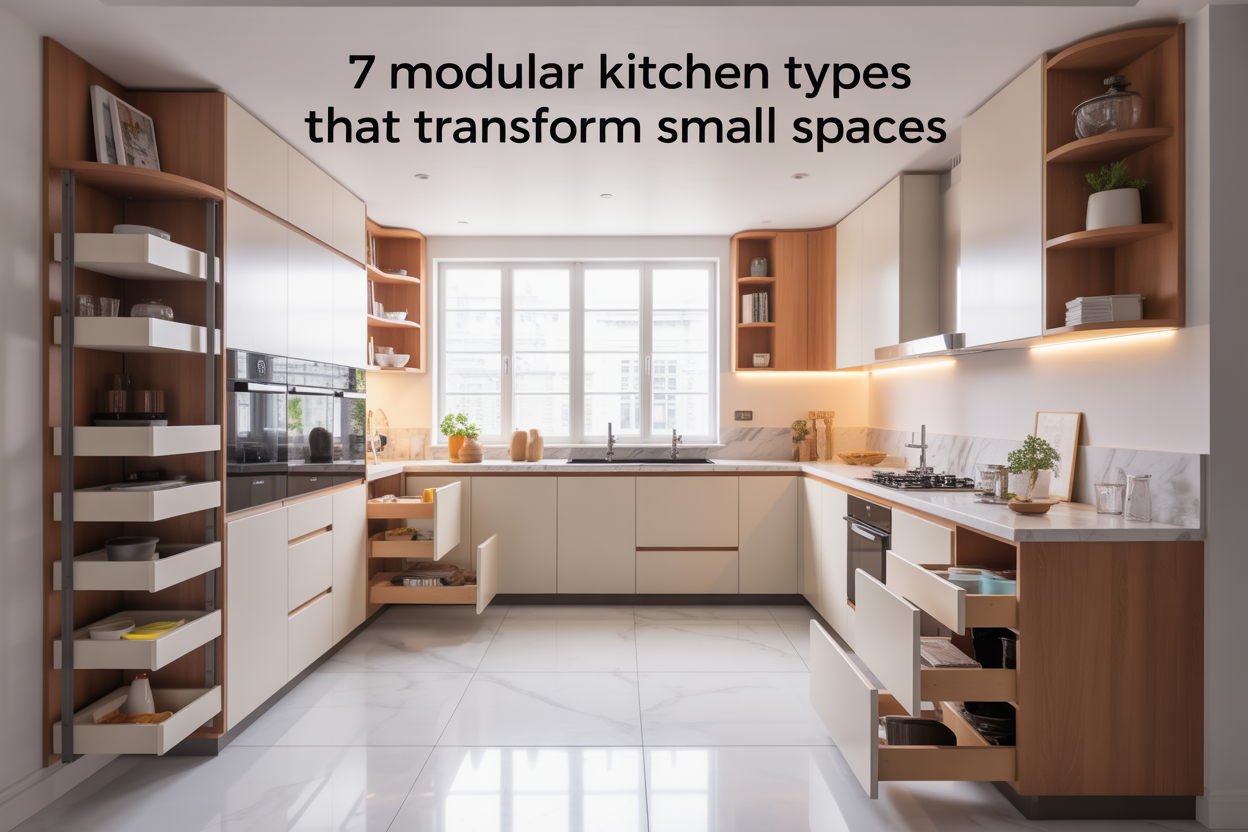
Small spaces don’t have to mean sacrificing your dream kitchen. Modular kitchen designs offer smart solutions that turn cramped cooking areas into efficient, stylish spaces that work well in your daily life.
This guide is for homeowners, renters, and apartment dwellers who want to maximize their compact kitchens without breaking the bank or dealing with major renovations. Modular systems let you customize your space with pre-made units that fit together perfectly.
We’ll explore the best modular kitchen layouts for tight spaces, including L-shaped and parallel designs that improve flow and storage. You’ll discover smart cabinet solutions that double your storage capacity and design strategies that make small kitchens feel surprisingly spacious. We’ll also break down realistic costs and share the latest trends that keep your kitchen looking fresh for years to come.
Understanding Modular Kitchens and Their Benefits for Small Spaces
What Makes Modular Kitchens Perfect for Compact Homes
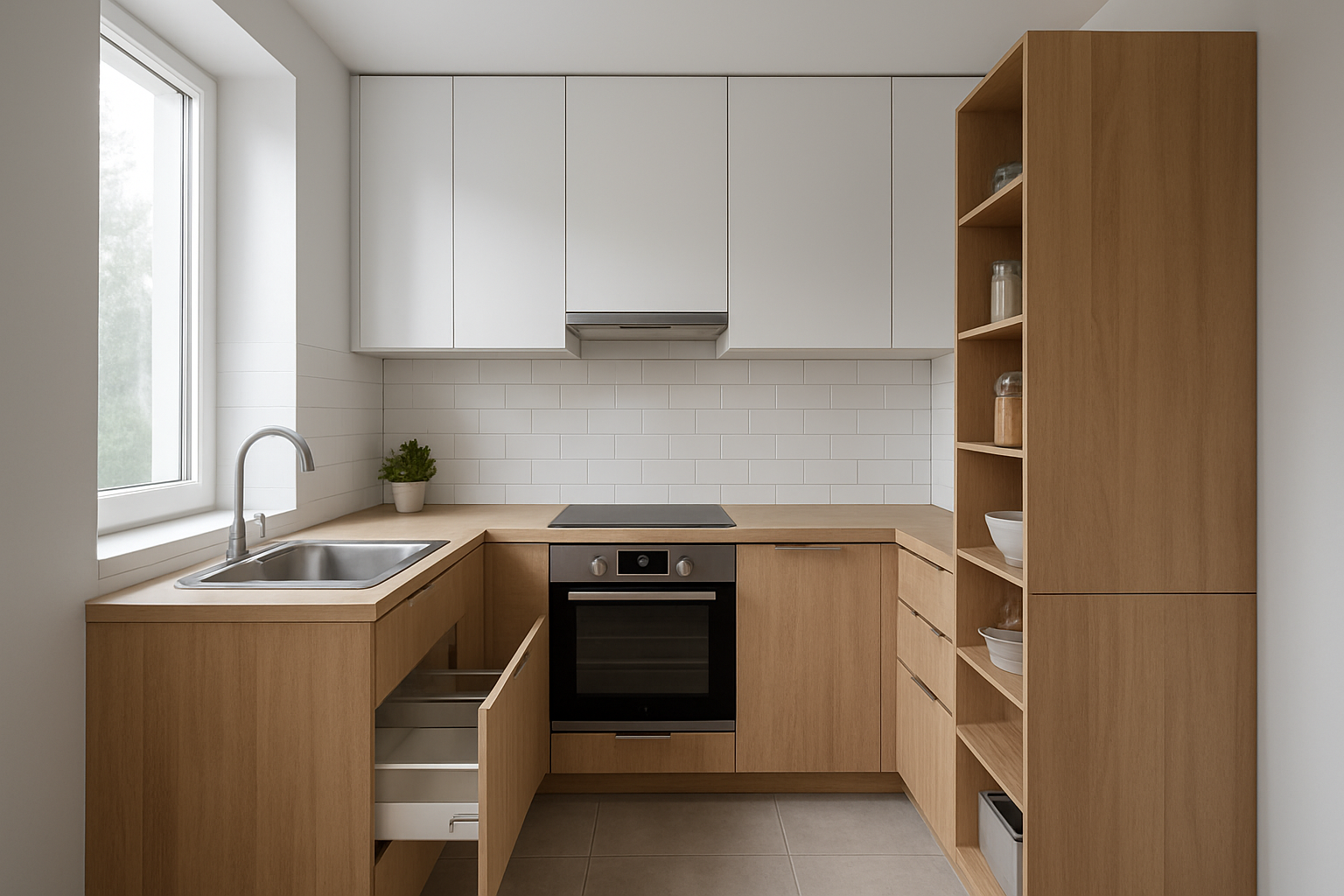
Modular kitchens excel in small spaces by utilizing every inch with precision through the strategic placement of appliances and countertops. These prefabricated units create distinct zones for food preparation and cleaning while maintaining ample room for movement, preventing the cramped feeling common in traditional small-kitchen designs.
Key Advantages of Pre-Made Customizable Units
Pre-assembled modular kitchen units offer significant advantages through their standardized, mass-production process that reduces design, production, and shipping costs. The easy installation process takes only days, not weeks, with precision-engineered components creating minimal mess during setup. Additionally, these units can be completely transferred when moving to similarly sized spaces, preserving your investment.
How Modular Design Maximizes Storage and Workflow
Smart storage solutions transform small kitchens into functional culinary environments through meticulously customized cabinetry that matches exact kitchen specifications. Vertical space utilization includes tall cabinets, overhead storage, wall-mounted hooks, and specialized solutions like D-carousel cabinets for corners and skirting drawers that capitalize on typically unused space below cabinets, creating organized and accessible storage areas.
Best Layout Options to Transform Your Small Kitchen
Straight Line Layout for Studio Apartments
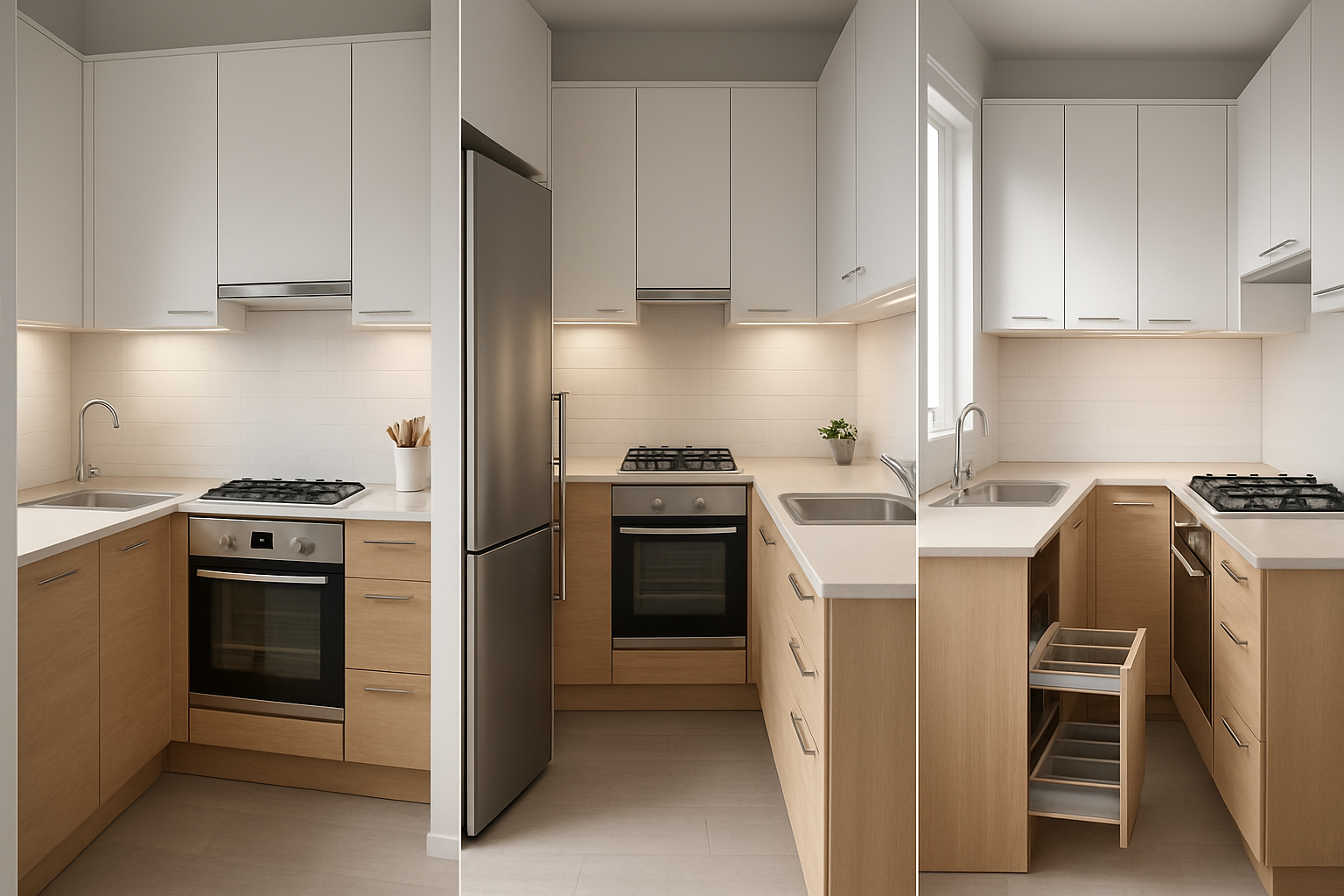
The straight line layout is perfect for studio apartments and compact spaces, positioning all kitchen elements along a single wall. This straight modular kitchen design maximizes floor space while maintaining functionality through efficient appliance placement. Keep the work triangle tight by positioning the sink, stove, and refrigerator within easy reach to optimize workflow in this streamlined configuration.
L-Shaped Design for Corner Spaces and Open Plans
L-shaped modular kitchen layouts run along two adjoining walls, making excellent use of corner space while freeing up the center of the room. This versatile design works particularly well for open-concept living, allowing for seamless integration with dining areas. The L-shaped configuration naturally separates cooking and cleaning zones while supporting an efficient work triangle, making it ideal for modern homes where the kitchen blends with living spaces.
U-Shaped Layout for Maximum Storage and Work Areas
U-shaped modular kitchen designs wrap cabinets and appliances around three walls, providing maximum storage and counter space for small kitchens. This layout offers the most storage potential while maintaining an efficient work triangle. Keep cabinetry light-colored and extend the cabinets to the ceiling to avoid a cramped feel while maximizing vertical storage.
Parallel Galley Design for Narrow Kitchens
The parallel modular kitchen design features two counters with a walkway between them, making it ideal for narrow spaces. This galley-style layout offers efficient workflow with storage options on both sides. Maximize the sense of space with light cabinetry, reflective backsplashes, and strategic lighting to create brightness and openness in this compact configuration.
Peninsula Layout for Added Counter Space
Peninsula layouts extend from existing cabinetry to create additional counter space and storage without requiring a full island. This design provides extra prep space while maintaining clear pathways through the kitchen. The peninsula can double as a breakfast bar or casual dining area, making it perfect for small kitchens that need multifunctional solutions.
Smart Cabinet Solutions That Maximize Storage
Choosing the Right Cabinet Styles for Small Spaces
Flat-panel cabinets represent the ideal choice for compact kitchens, offering a sleek, modern aesthetic that maximizes visual space. These modular cabinet units eliminate unnecessary ornamentation and create clean lines that make small areas appear larger and more organized.
Essential Modular Cabinet Units for Efficiency
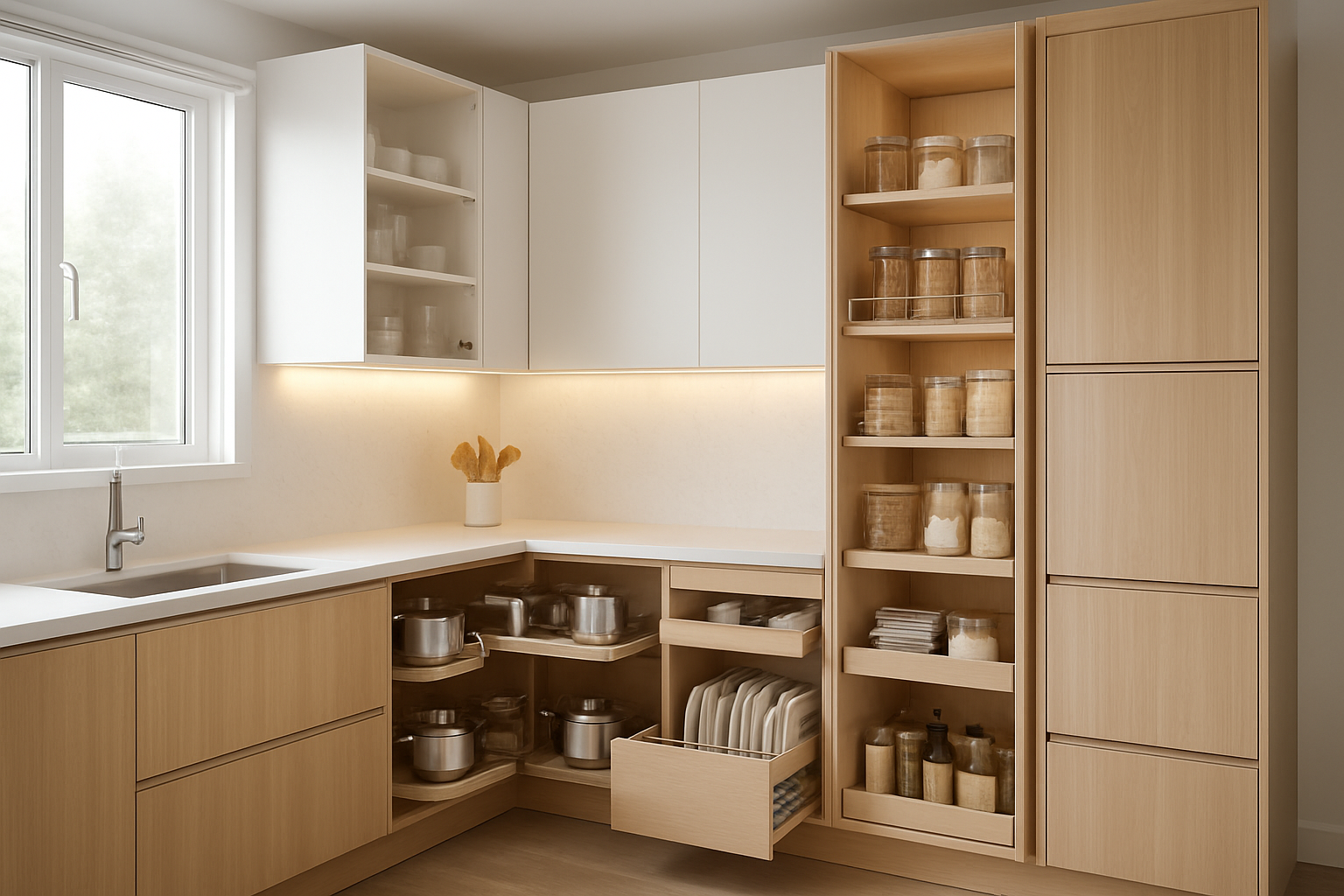
Pull-out pantry units transform deep cabinets into accessible storage systems, bringing items directly to you without requiring extensive searching. Corner carousel units (Lazy Susans) solve the common problem of unreachable corner spaces by rotating shelves outward, while under-sink organizers with removable trays work around plumbing obstacles to create functional utility zones.
Vertical Storage Solutions and Corner Utilization
Wall cabinet storage solutions maximize vertical space with shelf risers, under-shelf baskets, and door-mounted racks for lighter items such as mugs and spice jars. Adjustable drawer inserts create organized compartments for cutlery and cooking tools, while stacking modular cabinets vertically generates additional storage capacity without expanding the kitchen’s footprint.
Design Strategies That Create Visual Spaciousness
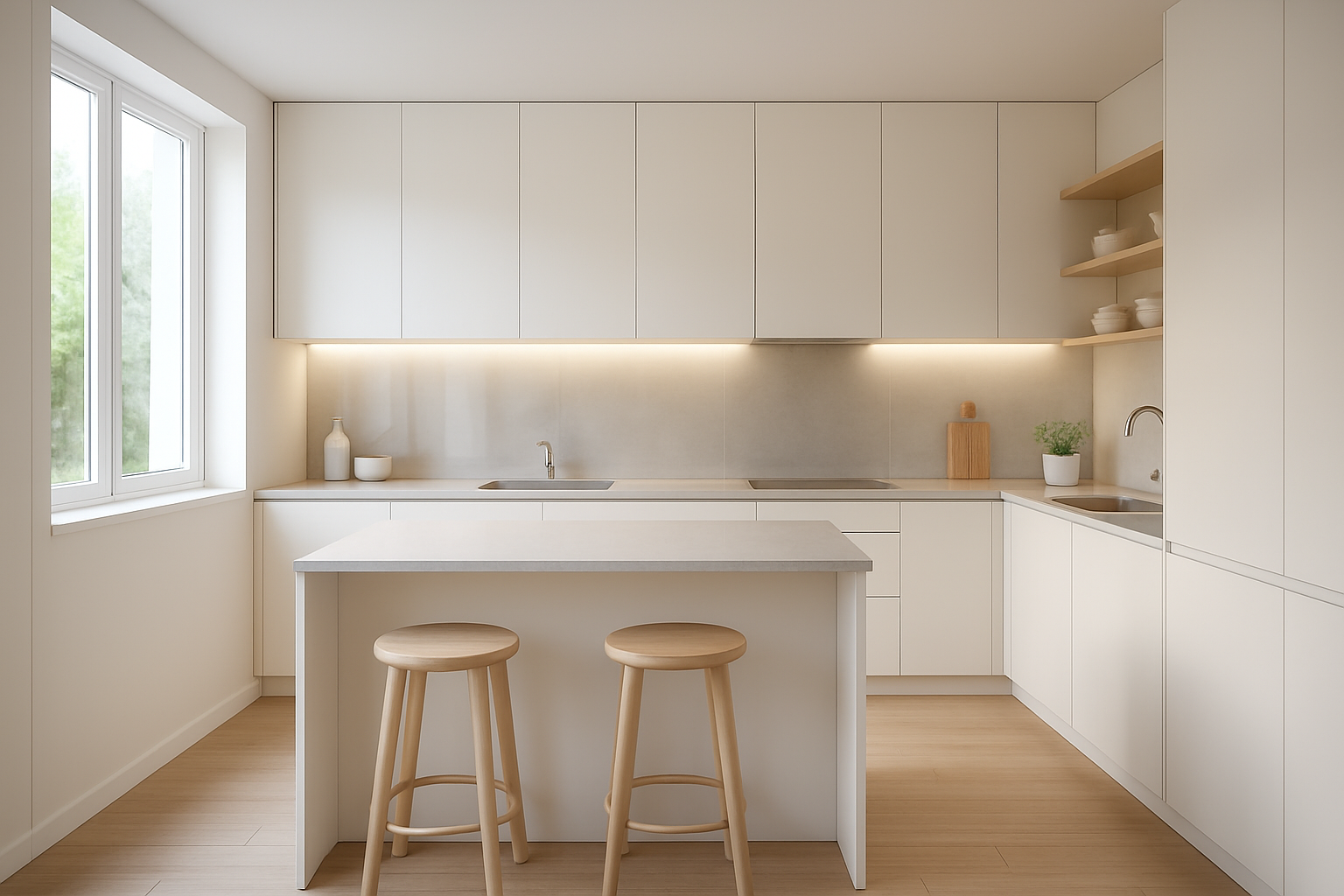
Two-Tone Color Combinations for Depth and Dimension
Creating depth in modular kitchen designs requires strategic color choices. Light colors for cabinets and countertops establish an airy, spacious foundation while dark accents in shadowed areas add visual dimension. Bold backsplashes paired with light cabinetry introduce personality without overwhelming compact spaces, making different types of modular kitchen designs appear larger than their actual footprint.
Metallic and Glass Cabinets for Openness
Glass-front cabinets maximize storage while maintaining visual openness in small modular kitchen layouts. Reflective metallic appliances and glossy cabinet fronts bounce natural light throughout the space, creating brightness that transforms cramped areas into inviting cooking environments. These modern modular kitchen design elements work particularly well in L-shaped and galley configurations where light distribution is crucial.
Open Shelving vs Closed Cabinet Benefits
Open shelving creates immediate visual spaciousness by eliminating heavy cabinet doors that can make small spaces feel cramped. This modular kitchen style allows for curated displays of cookware while maintaining accessibility. However, closed cabinets provide essential concealed storage for less attractive items, making the ideal approach a strategic mix of both elements.
Strategic Lighting Mix for Brightness and Space
Layered lighting transforms compact modular kitchen designs through under-cabinet strips, pendant lights, and accent lighting that brings warmth and dimension. This comprehensive approach ensures even light distribution across all working zones, while reflective surfaces amplify the effect. Strategic lighting placement makes contemporary modular kitchen designs feel significantly more spacious than their actual square footage suggests.
Space-Saving Furniture and Accessories
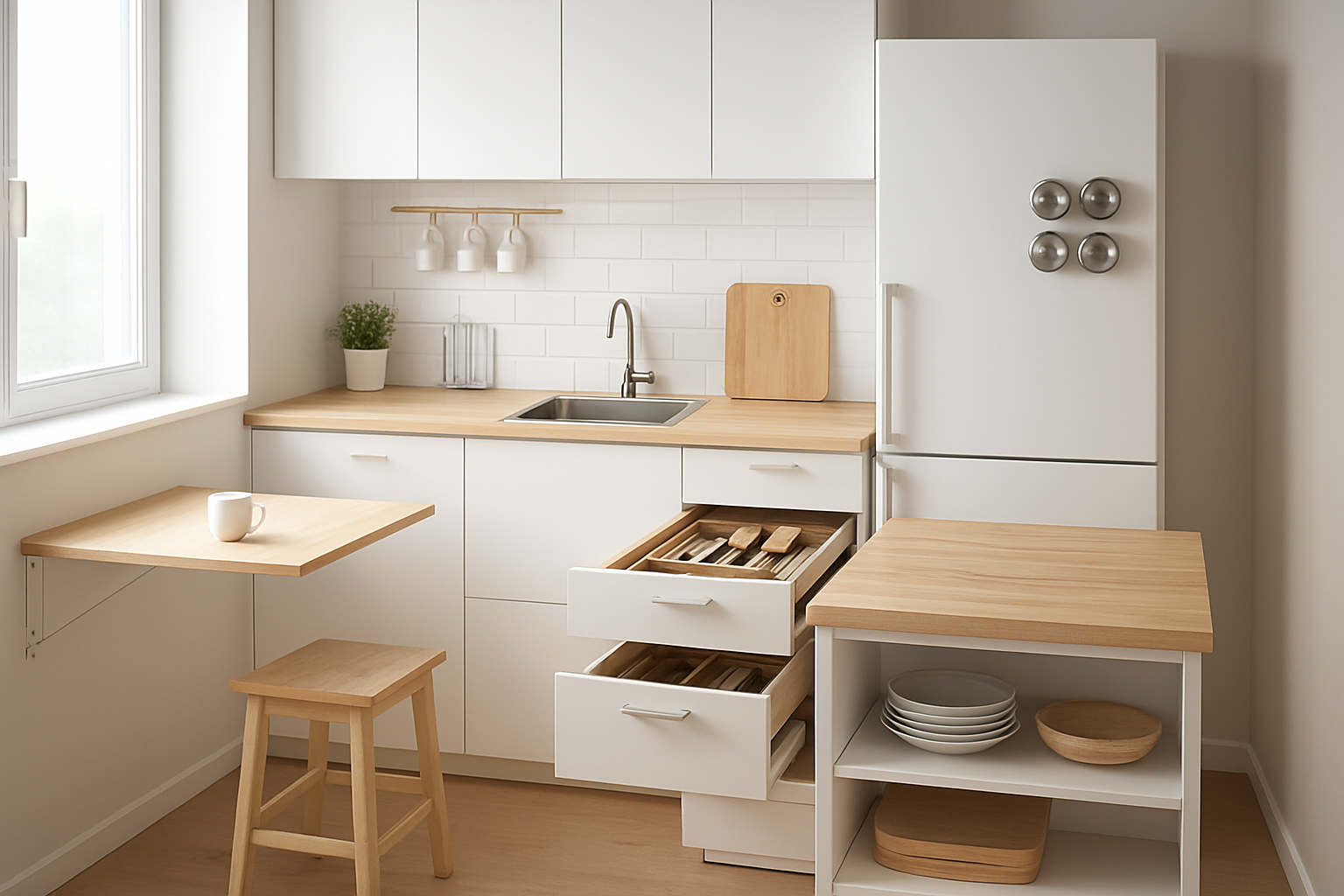
Multi-Functional and Foldable Furniture Options
Previously covered layout strategies set the foundation, but selecting the right furniture transforms small modular kitchen designs into highly efficient spaces. Multi-functional pieces maximize utility while minimizing footprint in compact areas.
Wall-Mounted Storage Solutions
Roll-out trays for kitchen cabinets and insert kits provide versatile organization options that adapt to changing storage needs. Drawer dividers, kitchen plate organizers, partitions, cutlery accessories, utensil trays, and towel bars create systematic storage solutions. Base cabinet inserts and drawer liners optimize every available inch, ensuring your small modular kitchen design stays organized while efficiently accommodating essential items.
Current Design Trends and Future-Proofing
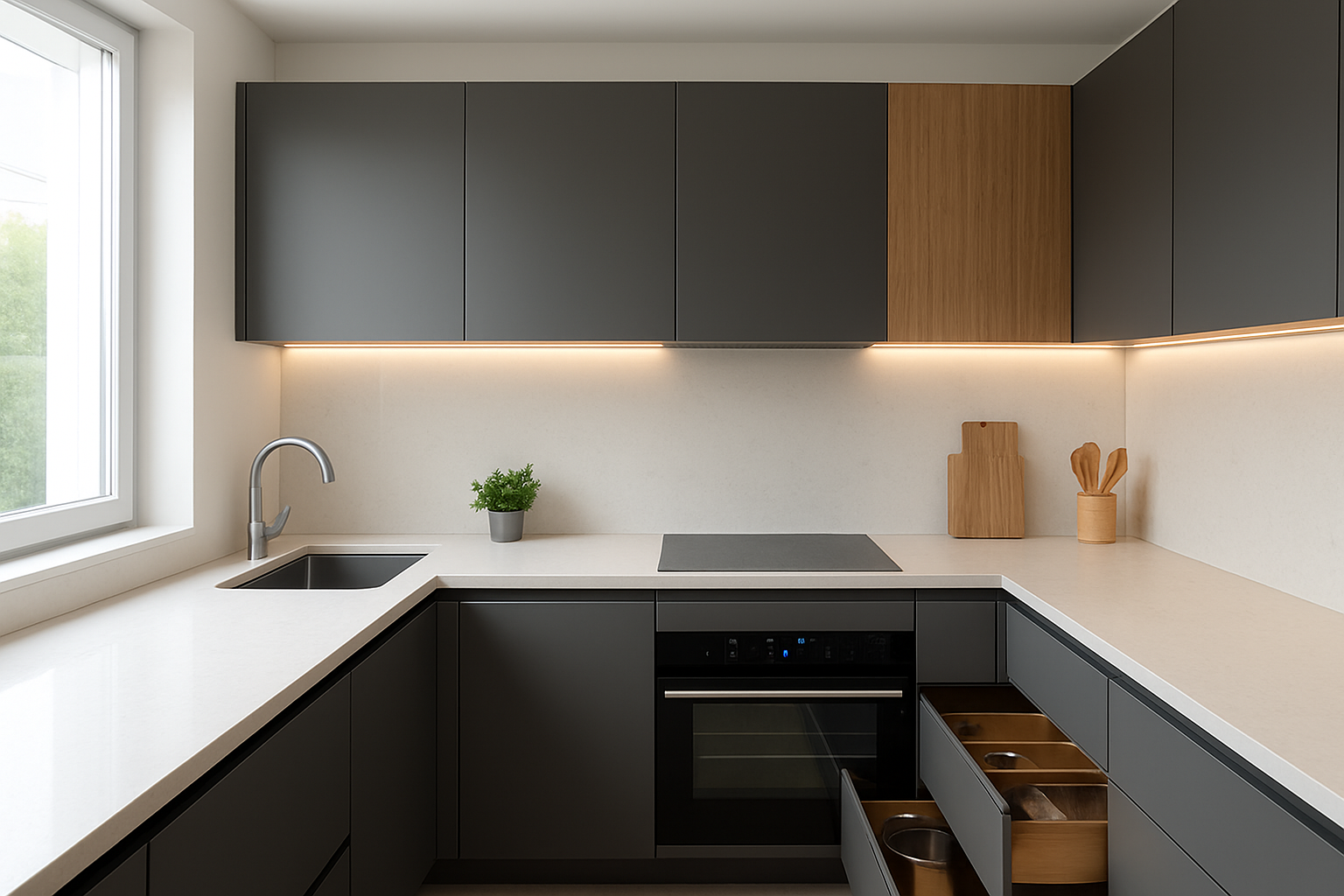
Popular 2025 Kitchen Styles and Finishes
The latest modular kitchen designs for 2025 embrace a perfect blend of technology, sustainability, and bold aesthetics. Earthy textures and organic materials, such as woven rattan cabinet accents, reclaimed timber, and handcrafted ceramic backsplashes, dominate contemporary modular kitchen styles. Jewel-toned accents in emerald green, sapphire blue, and amethyst purple are taking center stage, paired with neutral bases and metallic finishes such as brushed bronze or rose gold for a sophisticated, luxurious look.
Smart Features and Technology Integration
AI-driven kitchen automation represents the cutting edge of modern modular kitchen designs, featuring ovens that automatically adjust cooking times, smart sinks with motion sensors, and voice-activated appliances. Integrated systems connect appliances to smartphone apps for remote monitoring and energy management. Hybrid kitchen workspaces are trending, with modular islands that incorporate built-in charging stations, foldable desks, and concealed laptop storage to seamlessly accommodate work-from-home lifestyles.
Maintenance Tips for Lasting Performance
Flush-mount cabinetry with hidden handles and integrated appliances creates streamlined aesthetics while being easier to maintain. Textured laminates in matte or satin finishes offer sophisticated, fingerprint-resistant surfaces that require less upkeep than glossy alternatives. Investing in high-quality, sustainable materials like recycled countertops and upcycled wood ensures longevity while maintaining an eco-conscious appeal and lasting performance.
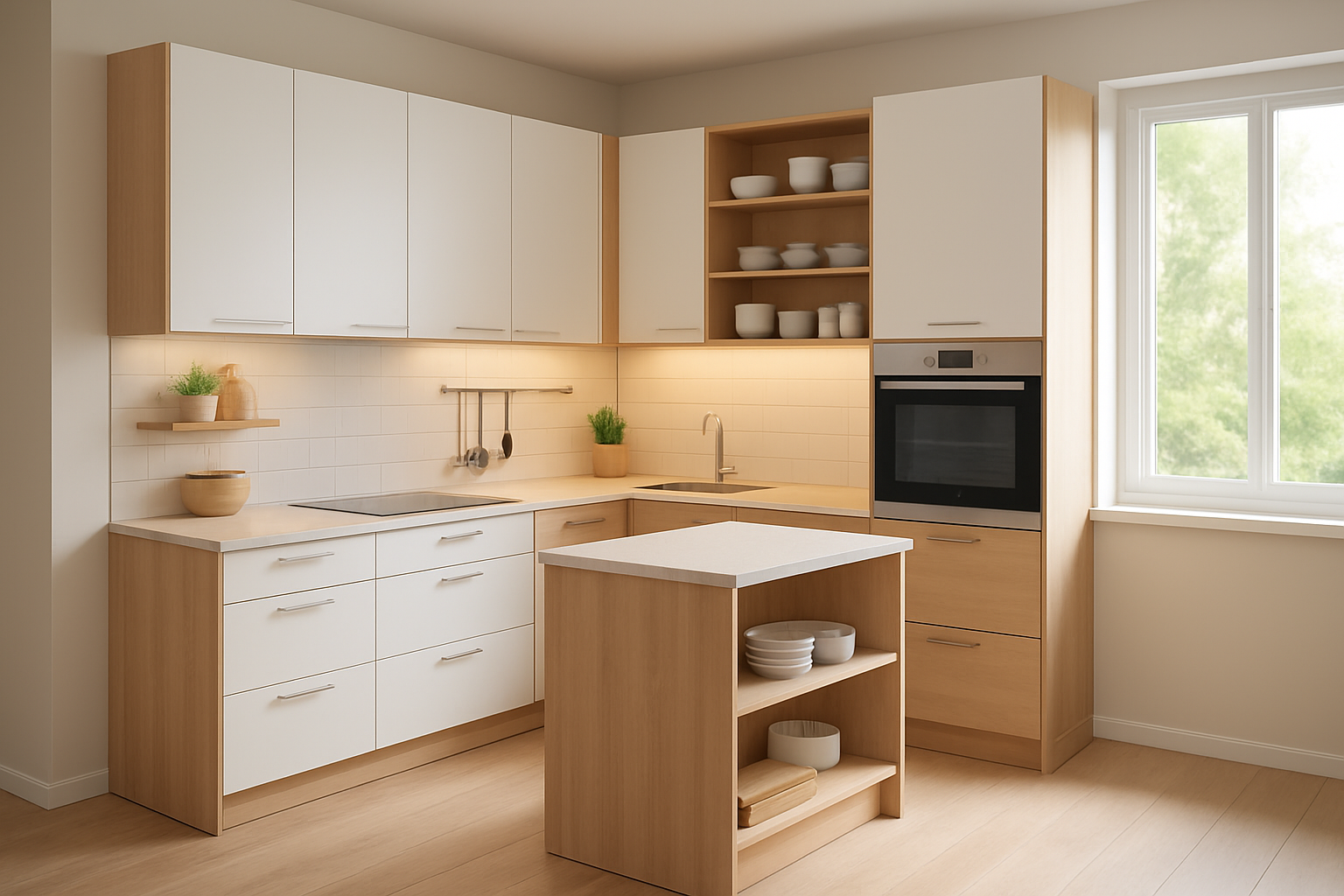
Designing a modular kitchen for small spaces requires careful planning, but the results can completely transform how you use and enjoy your home. From choosing the right layout—whether straight line, L-shaped, or galley—to incorporating smart cabinet solutions and space-saving accessories, every decision contributes to creating a functional and visually appealing kitchen. The combination of proper lighting, two-tone color schemes, and strategic placement of appliances can make even the smallest kitchen feel open and efficient.
The investment in a modular kitchen extends far beyond immediate functionality. With their easy maintenance, upgrade flexibility, and strong resale value, modular kitchens prove to be a smart long-term choice for homeowners. As design trends continue to evolve toward matte finishes, handleless cabinets, and multi-functional features, your small kitchen can remain both current and practical for years to come. Take the time to assess your specific needs and space constraints, then implement these proven strategies to create a kitchen that maximizes every square inch while reflecting your personal style.